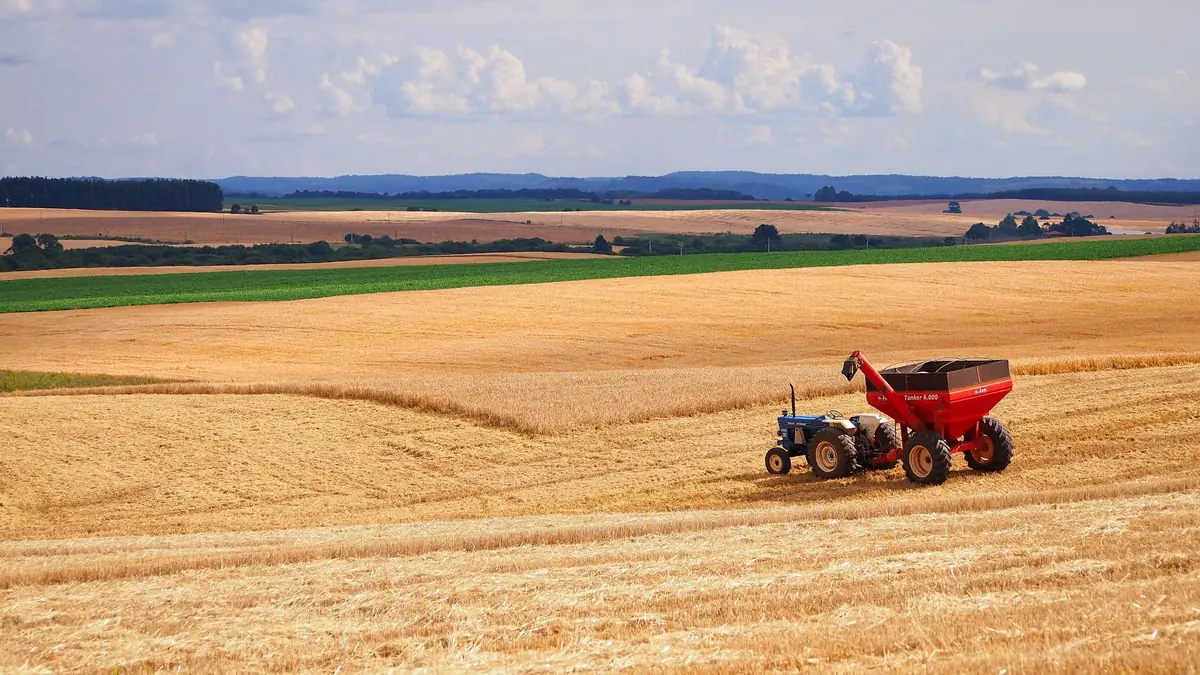
Farms, ranches, and most farm service businesses belong in sector 11, Agriculture, Forestry, Fishing and Hunting. The code depends on what makes up the largest share of the value you produce for market, not on what you call the place. A grain farm, a cow-calf ranch, and a custom harvester are all in sector 11, but in different subsectors. A vineyard that makes its own wine is not in sector 11 at all. And the code on Schedule F comes from a short IRS list of 17 codes, so it is often broader than your six-digit NAICS industry.
The five parts of sector 11
NAICS separates agricultural production, meaning establishments that run the whole farm or ranch, from support activities, which perform part of the work for others on a contract or fee basis.
| Subsector | What it covers | Examples |
|---|---|---|
| 111 Crop Production | Farms, orchards, groves, greenhouses, and nurseries growing crops, plants, vines, or trees | 111219 vegetables, 111332 grape vineyards, 111940 hay |
| 112 Animal Production and Aquaculture | Ranches, farms, and feedlots raising animals, plus fish and shellfish farms | 112111 beef cattle, 112420 goats, 112310 chicken eggs |
| 113 Forestry and Logging | Timber tracts, forest nurseries, gathering forest products, logging | 113310 logging |
| 114 Fishing, Hunting and Trapping | Catching fish and game from their natural habitats | 114111 finfish fishing |
| 115 Support Activities for Agriculture and Forestry | Work done for farms and forests on a contract or fee basis | 115113 machine harvesting, 115116 farm management, 115210 animal production support |
The line between 111 and 115 depends on who runs the operation. Crop production includes establishments that “own, operate, and manage” and those that “operate and manage” a farm, such as tenant farmers. One that only manages farms for others goes to 115116. A custom combining outfit with its own machines goes to 115113; one supplying crews for hand harvesting goes to 115115, Farm Labor Contractors and Crew Leaders.
Some farm-sounding activities are classified elsewhere. Experimental farms run for agricultural research go to research and development (industry 54171). Boarding and training horses (except racehorses) is 115210, while raising horses is 112920. Raising dogs, cats, or pet birds for sale is 112990. For pet care businesses, see pet services.
Mixed farms: the one-half rules
NAICS settles mixed operations with one-half tests, each using value for market as a share of total agricultural production:
- Crops or animals? If crops are one-half or more, the farm is in subsector 111; if animals are, it is in 112.
- Which family? A farm goes to a specific industry when one product, or one family of products (such as oilseed and grain, vegetables and melons, or fruit and tree nuts), is one-half or more of agricultural production.
- No family reaches one-half. A mostly-crop farm is then “general combination crop farming,” 111998. A mostly-animal farm is “combination animal farming,” 112990.
Some families have their own combination code. If oilseeds and grains together reach one-half but no single one does, the code is 111191, Oilseed and Grain Combination Farming. Fruit and tree nuts have 111336.
Example 1. A farm sells $400,000 of corn, $250,000 of soybeans, and $350,000 of beef cattle, for $1 million in total. Crops are 65%, so the farm is in subsector 111. Corn and soybeans are both in the oilseed and grain family, which is 65% of production. Neither crop alone is one-half: corn is 40% and soybeans are 25%. The NAICS code is 111191.
Example 2. A farm sells $300,000 of vegetables, $250,000 of hay, and $450,000 of beef cattle. Cattle is the largest single product, but crops together are 55%, so the farm is in subsector 111. No crop family reaches one-half (vegetables 30%, hay 25%), so the code is 111998. The largest single product does not decide the code; the tests run in order.
If your mix swings with prices or rotations, look at several years. For secondary activities, see can a business have more than one NAICS code.
Schedule F activity codes are not the full NAICS list
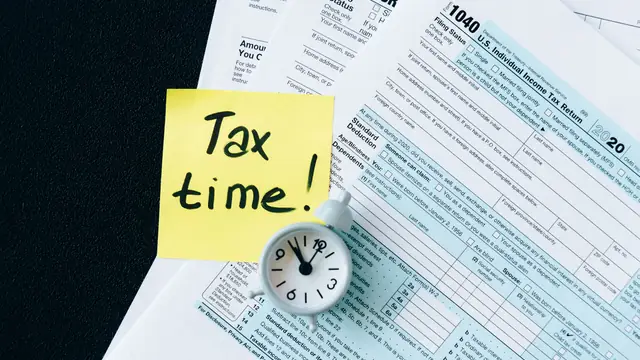
Sole proprietors and single-member LLCs report farm income on Schedule F (Form 1040); partnerships file it with Form 1065. Line B asks for one of the 17 codes in Part IV on page 2 of Schedule F, choosing “the code that best describes the source of most of your income” (2025 instructions). The codes are based on NAICS, but most are roll-ups:
| Schedule F code (2025) | Covers these NAICS industries |
|---|---|
| 111100 Oilseed and grain farming | 111110 to 111199 |
| 111210 Vegetable and melon farming | 111211, 111219 |
| 111300 Fruit and tree nut farming | 111310 to 111339, including 111332 vineyards |
| 111400 Greenhouse, nursery, and floriculture production | 111411 to 111422 |
| 111900 Other crop farming | Tobacco, cotton, sugarcane, hay, sugar beets, peanuts, 111998 |
| 112111, 112112, 112120, 112210 | Beef cattle, cattle feedlots, dairy, hogs (same as NAICS) |
| 112300, 112400, 112510, 112900 | Poultry and eggs, sheep and goats, aquaculture, other animal production |
| 113000, 113110, 113210, 113310 | Forestry and logging, timber tracts, forest nurseries, logging |
On Schedule F, the farm in Example 1 would enter 111100 and the farm in Example 2 would enter 111900. Use the IRS code on the return, and the six-digit NAICS code when a lender, grant program, or SAM.gov asks for one. To see how the digits roll up, read 5-digit vs 6-digit NAICS codes.
The Schedule F caution box lists income that does not belong there:
- Agricultural services such as soil preparation, veterinary work, farm labor, or horticultural services, if they are your main source of income. These go on Schedule C. The Schedule C list includes 115110 (support activities for crop production, including cotton ginning), 115210, and 115310.
- Breeding, raising, or caring for dogs, cats, or other pet animals (Schedule C, 112900).
- Managing a farm for a fee or on a contract basis (Schedule C).
- Sales of livestock held for draft, breeding, sport, or dairy purposes (Form 4797).
Fishing (114110) and hunting and trapping (114210) are also on the Schedule C list, not Schedule F. A farmer who does some custom machine work on the side reports it on Schedule F, line 7, “Custom hire (machine work) income,” and keeps the farm code while farming is the main activity. Partnerships and corporations also enter a business code from their own return’s instructions (Form 1065, 1120, or 1120-S). For more, see NAICS codes on your tax return.
Wineries, farm stands, processing, and agritourism
Under the 111 definition, crop production is “typically completed when the raw product or commodity grown reaches the ‘farm gate’ for market, that is, at the point of first sale.” Work past that point can move the business to another sector:
| Main activity | Code to compare |
|---|---|
| Growing grapes and selling them, or sun drying them into raisins | 111332 Grape Vineyards |
| Growing grapes and making wine, or making wine from purchased grapes | 312130 Wineries |
| Drying fruit artificially rather than in the sun | 311423 Dried and Dehydrated Food Manufacturing |
| Gathering maple sap and boiling it into pure syrup in the field | 111998 All Other Miscellaneous Crop Farming |
| Slaughtering livestock, including custom slaughtering | 311611 Animal (except Poultry) Slaughtering |
| A produce stand or market that mainly resells purchased fruit and vegetables | 445230 Fruit and Vegetable Retailers |
| Riding stables (not boarding), shooting ranges, and similar paid recreation | 713990 All Other Amusement and Recreation Industries |
| Petting zoos | 712130 Zoos and Botanical Gardens |
| Dude ranches and guest ranches with lodging | 721214 Recreational and Vacation Camps |
| Farm-stay rooms run as a bed-and-breakfast | 721191 Bed-and-Breakfast Inns |
Wineries show the rule most clearly. The 312130 definition includes “growing grapes and manufacturing wines and brandies,” and the official index lists 111332 as “grape farming without making wine.” A vineyard that starts making its own wine moves into manufacturing. A roadside stand selling the farm’s own crops is generally part of the farm; a stand that mostly resells other growers’ produce is retail.
NAICS has no agritourism code. Pumpkin patches, farm tours, and seasonal events generally stay under the farm’s code while crop or animal sales are the main activity. If admissions, lodging, or events bring in more than farm products, compare the recreation and accommodation codes above. A tasting room, store, or guest lodging run as a separate establishment may get its own code. See establishment vs. company classification.
Hobby farms
NAICS does not ask whether an activity makes money. The IRS and USDA do.
- IRS. Publication 225 (2025) says that if you don’t farm to make a profit, you report the income on Schedule 1 (Form 1040), line 8j. You can no longer deduct the expenses, even if you itemize. An activity is presumed to be for profit if it made a profit in at least 3 of the last 5 tax years (2 of the last 7 for horse breeding, training, showing, or racing). Otherwise the IRS weighs all the facts, such as whether you run the farm in a businesslike way; ask a tax professional about your case.
- USDA. The Census of Agriculture counts as a farm “any place, urban or rural, that produced and sold, or normally would have sold, $1,000 or more of agricultural products during the census year.” Many hobby farms meet that threshold, and response is required by law.
Census of Agriculture vs. the Economic Census
The Census Bureau’s Economic Census does not cover most of sector 11. Farms (111 and 112) are measured by the USDA National Agricultural Statistics Service in the Census of Agriculture, held every five years, which publishes farm counts by NAICS classification. The 2022 Economic Census added industry groups 1151 (support activities for crop production) and 1152 (support activities for animal production), so a custom harvester or farrier may get an Economic Census form while a corn grower gets the USDA one. Forestry, logging, fishing, hunting, and support activities for forestry (1153) stayed outside it.
SBA size standards for farm codes
Most sector 11 size standards are low receipts-based limits. Figures on this site come from the SBA table effective March 17, 2023:
| Code | Industry | Size standard |
|---|---|---|
| 111110 | Soybean Farming | $2.25 million |
| 112111 | Beef Cattle Ranching and Farming | $2.5 million |
| 111332 | Grape Vineyards | $4 million |
| 112112 | Cattle Feedlots | $22 million |
| 112310 | Chicken Egg Production | $19 million |
| 115113 | Crop Harvesting, Primarily by Machine | $13.5 million |
| 115114 | Postharvest Crop Activities | $34 million |
| 113310 | Logging | 500 employees |
| 312130 | Wineries | 1,000 employees |
Choosing winery over vineyard switches the test from receipts to employees. Affiliates count either way; see SBA size standards explained.
These may change. On August 20, 2026, SBA proposed setting size standards for 338 four- and five-digit industry groups instead of six-digit codes, moving many industries to employee-based standards, and setting a $30.6 million minimum for receipts-based standards. SBA said farm counts under the proposal could not be estimated precisely because the Census of Agriculture does not report data by firm size. Comments closed September 21, 2026; until a final rule takes effect, the current table applies. Check the standard in force before you certify.
Still unsure? Try the code finder, or match an older SIC code with the NAICS to SIC converter.
Sources
- Census Bureau 2022 NAICS Manual: definitions of sector 11 and subsectors 111 and 112, including the one-half rules and combination farming, and the definitions and cross-references for 111332, 312130, 111998, 112990, and 115116.
- Census Bureau NAICS reference files: the 2022 index entries for “grape farming without making wine,” custom slaughtering, petting zoos, and dude ranches.
- 2025 Schedule F (Form 1040) and Instructions for Schedule F: the Part IV list of 17 principal agricultural activity codes, the line B rule, and the list of income not to report on Schedule F.
- 2025 Instructions for Schedule C: the agriculture, fishing, and support activity codes on the Schedule C list.
- IRS Publication 225, Farmer’s Tax Guide (2025): not-for-profit farming, the profit presumption, and the farm definition.
- USDA NASS Census of Agriculture FAQ: the $1,000 farm definition, the five-year schedule, and the reporting requirement.
- What’s New for the 2022 Economic Census: the coverage expansion to NAICS 1151 and 1152.
- SBA Table of Size Standards and 13 CFR 121.201: the size standards currently in force.
- SBA proposed rule, Small Business Size Standards (91 FR 53741, August 20, 2026): the proposed move to industry-group standards and the note on farm data.