
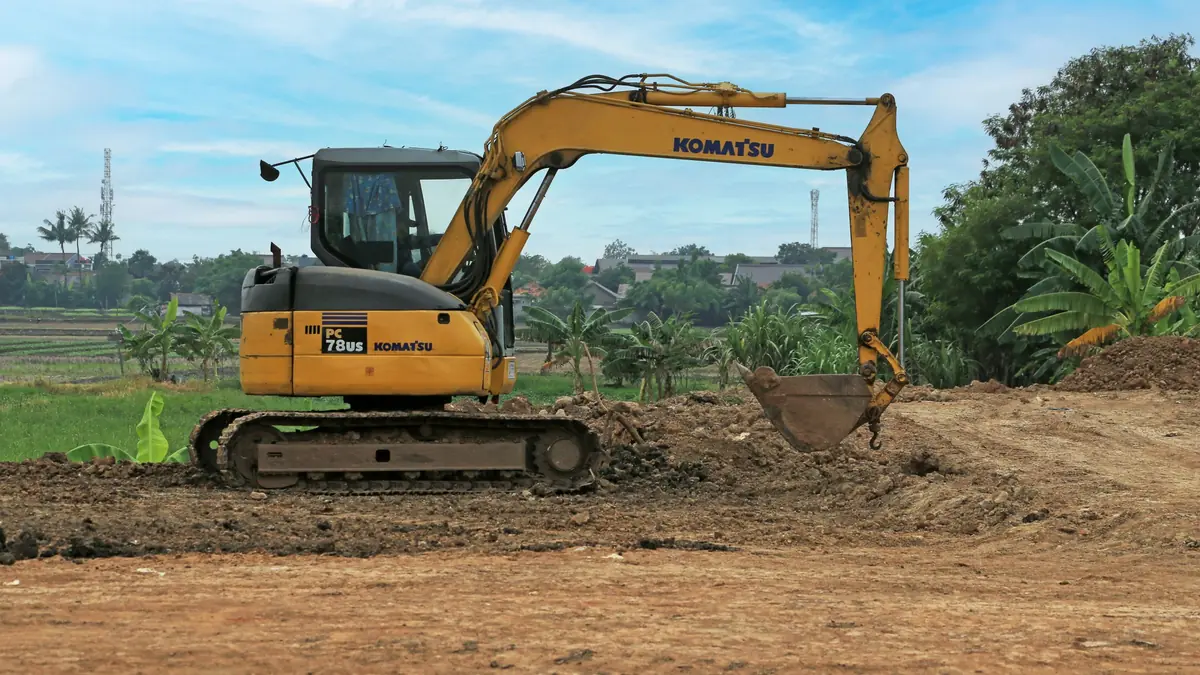
Why excavation contractors use 238910
Excavation is a specialty trade, and NAICS groups it with the other work done to get a site ready before anything is built. The official definition of 238910 covers “site preparation activities, such as excavating and grading, demolition of buildings and other structures, and septic system installation.” It adds that “earthmoving and land clearing for all types of sites (e.g., building, nonbuilding, mining) is included” and that renting construction equipment “with operator (except cranes)” belongs here too.
The Census index lists a wide range of dirt work in 238910:
- Digging foundations and basements, and backfilling
- Grading and dirt moving for building sites and subdivisions
- Trenching on land and dewatering
- Land clearing and cutting new rights of way
- Building, interior and exterior demolition, and whole-building deconstruction
- Septic system and drainage field installation
- Foundation drilling, test boring and core drilling for construction
- Backhoe, bulldozer and other equipment rental with an operator
An owner-operator with one skid steer and a fleet with dozens of excavators both belong here if the work is site preparation.
Where excavation contractors split off
Underground utilities. Contractors that mainly install water mains, sewer lines and storm sewers are classified with that infrastructure, 237110, even though the job is mostly digging. The 238910 definition sends “constructing distribution lines” for water, sewer, petroleum, gas, power and communication to the utility system construction codes. Oil and gas lines are 237120 and power and telecom lines are 237130. Sewer connections inside the property line are plumbing work; see our plumbing and HVAC page.
Roads. Grading and building public roads, streets and highways is 237310, which also lists oil field and logging road construction. Private driveways and parking lots are 238990, along with patios, pavers and fencing.
Directional drilling and water projects. Horizontal drilling for cable, pipeline and sewer installation is 237990, as are land drainage, dredging, earth retention systems and underwater trenching. The 238910 definition sends earth retention and underwater trenching there.
Hauling only. Dump truck operators that haul dirt, gravel, sand or topsoil without digging are trucking, 484220 locally. Hauling rubble or brush with collection or disposal is waste collection, 562119.
Equipment without an operator. Renting out excavators or dozers bare is 532412. Cranes rented with an operator are 238990.
Mining and oil fields. Removing overburden before mining at quarries or open pit mines is classified in sector 21. Excavating slush pits and cellars at oil and gas wells on contract is 213112; building lease pads and roads with heavy equipment stays in construction. See our oilfield services page.
Contamination and land development. Remediating contaminated soil is 562910, although the 562910 definition sends excavating the soil itself to 238910. Buying land, installing roads and utilities, and selling lots to builders is land subdivision, 237210.
Mixed-revenue examples
| Revenue mix | Code to use |
|---|---|
| 60% foundation digging, 40% lot grading | 238910 |
| 55% sewer and water line installs, 45% site work | 237110 |
| 70% demolition, 30% hauling the debris | 238910 |
| 65% directional boring for fiber, 35% trenching | 237990 |
| 60% septic installs, 40% septic pumping | 238910 |
| Dump trucks hauling gravel and fill, no digging | 484220 |
Bidding on public work
Site work is often bid separately on public projects, and the code on a solicitation sets the size standard you are measured against. Specialty trade codes such as 238910 have a lower receipts standard than heavy civil codes such as 237110, 237310 and 237990, so a contractor can be small for one and not the other. If you do underground utility or road work, register those codes as secondary codes alongside 238910. Many state transportation agencies also certify disadvantaged business enterprises by NAICS code; our guide to DBE certification and NAICS codes covers how codes are listed, and the construction page covers general contractors.